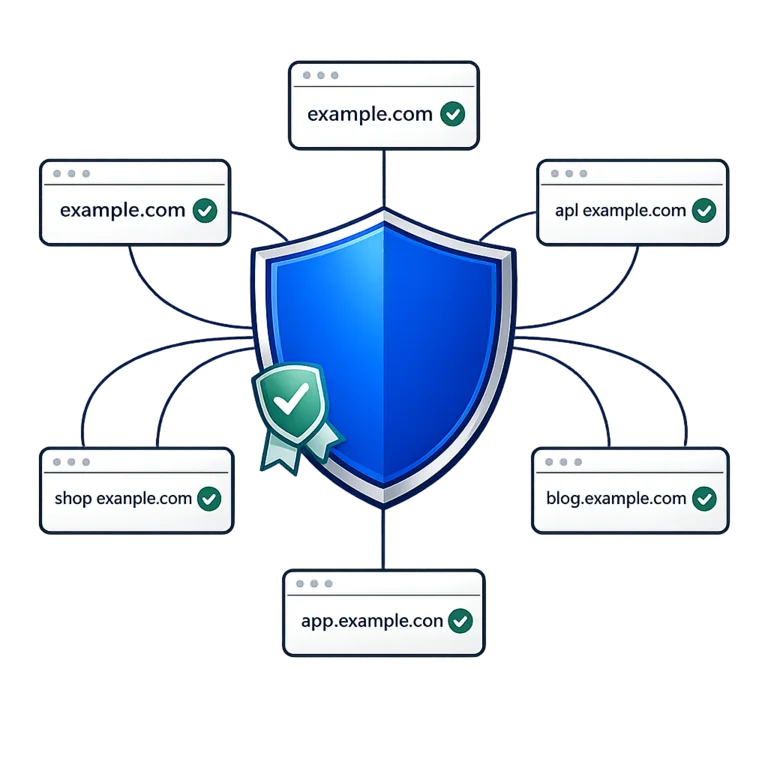
How many hostnames fit on one multi-domain SSL certificate?
A multi-domain certificate from CloudHosting holds up to 250 hostnames, enough for large brand portfolios and complex service infrastructures. The base price already includes the primary hostname plus 2 SANs, or 4 SANs on the GeoTrust and Thawte certificates, so you start with 3 or 5 protected names. Beyond that, every hostname takes one SAN slot, and a wildcard entry also occupies a single slot even though it covers many subdomains. You do not need to fill the list at purchase time: begin with the hostnames you actually use and extend the certificate later as projects appear. If you are planning something close to the 250 limit, write to support first and we will help you structure the order sensibly.
Can I add a hostname after the certificate is issued?
CloudHosting lets you add hostnames to a multi-domain certificate at any time during its term, which is one of the main reasons to pick SAN. You order the extra SAN, we add the hostname to the certificate, and the new domain goes through validation just like the original ones. Once it passes, the certificate is reissued and you install the updated file on your servers. The old certificate keeps working until you swap it, so there is no downtime for the sites already covered. The expiry date does not move: the added hostname runs on the remaining term, and everything still renews on a single date. Plan the validation step in advance, since you need DNS or mailbox access for the new domain.
Can a SAN entry be a wildcard?
On most multi-domain certificates CloudHosting sells, a SAN entry can be a wildcard such as *.example.com, priced per entry on each card; the EV certificate is the exception, because EV cannot cover wildcard names. One such entry covers every subdomain of that domain, so shop.example.com, mail.example.com and any names you create later are protected without changing the certificate. Keep in mind that a wildcard covers one subdomain level, and the bare domain is technically a separate name, so plan your entry list accordingly. The practical value is the combination: in one certificate you can mix ordinary hostnames from several domains with wildcard entries for the domains where subdomains appear and disappear often.
Do all domains need to belong to the same owner?
CloudHosting can issue one multi-domain certificate for domains registered to different companies or people, because the certificate authority checks that each domain passes validation, completed by whoever controls it. This makes DV SAN certificates practical for agencies, resellers and IT teams that manage sites for many clients and want one certificate with one renewal. Three honest caveats: every domain owner has to cooperate during validation; all hostnames share one private key and one file, so whoever installs the certificate can serve any listed name; and an OV or EV certificate shows one verified company, which fits unrelated clients poorly. If clients need strict separation from each other, separate certificates are the cleaner choice; write to support if you are unsure.
SAN or wildcard SSL: which one do I need?
CloudHosting sells both, and the right one depends on your list: a SAN certificate covers up to 250 names across different domains, while a plain wildcard only ever covers subdomains of one domain. If your list contains several different domains, for example a .com, a .net and country domains, SAN is the right tool. If everything lives under a single domain and you keep creating subdomains, a wildcard is simpler, since new subdomains are covered automatically. Many real setups need both at once: a few separate domains plus fast-changing subdomains under one of them. In that case take a multi-domain certificate and add a wildcard SAN for the busy domain. Count your hostnames for the next year or two before ordering.
How much does a multi-domain SSL certificate cost?
Sectigo multi-domain certificates at CloudHosting start from 19.91 EUR a year without VAT, the average yearly price on the longest term, and that base price already includes the primary hostname plus 2 SANs, so 3 hostnames in total. Every additional hostname is billed at a fixed per-SAN price for the same term as the certificate, shown on each card, so the total grows predictably as your list grows. The catalog shows the full cost for each term, paid once for the whole period; multi-year terms are delivered as consecutive certificates reissued at each interval under CA/B Forum rules. Compared with buying a separate certificate for every domain, you also save the work of tracking many renewals and juggling several files.
What is a SAN or UCC certificate?
SAN stands for Subject Alternative Name, the field of an SSL certificate that lists every hostname it is valid for, and the multi-domain certificates CloudHosting sells hold up to 250 entries there. When a browser or mail client connects, it checks whether the name it requested appears in that list, so one certificate can serve many sites. UCC, short for Unified Communications Certificate, is the older Microsoft term for exactly the same construction, coined for Exchange deployments that need names like autodiscover and webmail on one certificate. So when Exchange or Zimbra documentation asks for a UCC certificate, any multi-domain SAN certificate from this page satisfies the requirement.
Should I choose DV, OV or EV for a multi-domain certificate?
CloudHosting offers multi-domain certificates at all three levels: DV from Sectigo and GeoTrust, OV from GeoTrust, Thawte and DigiCert, and EV from Sectigo. DV only proves control of each hostname through a DNS record or a confirmation email, so issuance is quick and prices start from 19.91 EUR a year; for most websites, mail servers and internal services that level is entirely sufficient, because the encryption itself is identical. OV and EV add a one-time vetting of your company for the whole certificate: documents are checked and the verified legal entity is written into the certificate, where corporate and banking clients can see it. Expect them to take longer. Choose OV or EV when customers or partners require proof of who operates the service.
How does renewal work with many hostnames on one certificate?
CloudHosting keeps every hostname of a multi-domain certificate on one renewal date, and within your paid term of 1 to 5 years each reissue is free. Because a public certificate is now valid for up to 199 days, a longer term arrives as consecutive certificates: you reissue from the client panel, which shows the days left and keeps your current list of hostnames, so no name drops off by accident. The new file then goes onto every server that serves those names. Our free chssl agent for Linux servers with nginx, Apache or Docker can do that step for you, installing each reissue and reloading the web server automatically. One file and one date for all names is the practical gain over many separate certificates.